There is something special about October.
The leaves begin to change.
The mornings become crisp.
Pumpkins appear everywhere.
Cozy sweaters come out of closets.
And children begin counting down to Halloween.
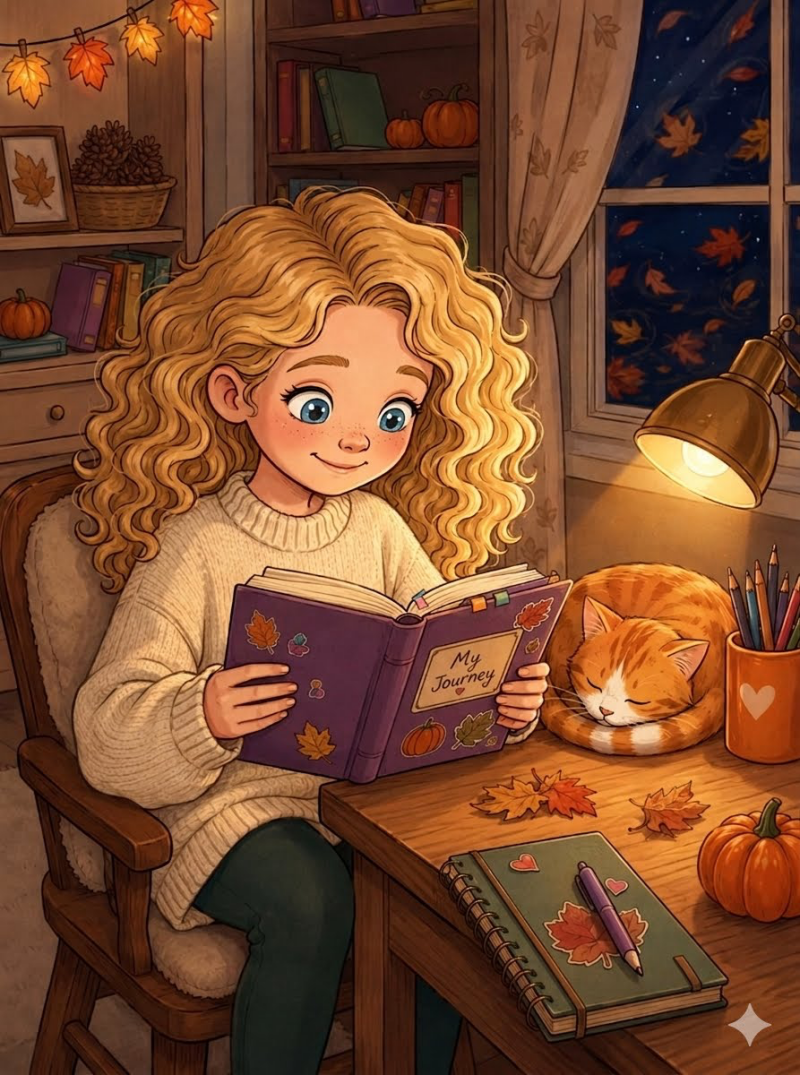
For Peyton Carter, October has always been one of her favorite times of year.
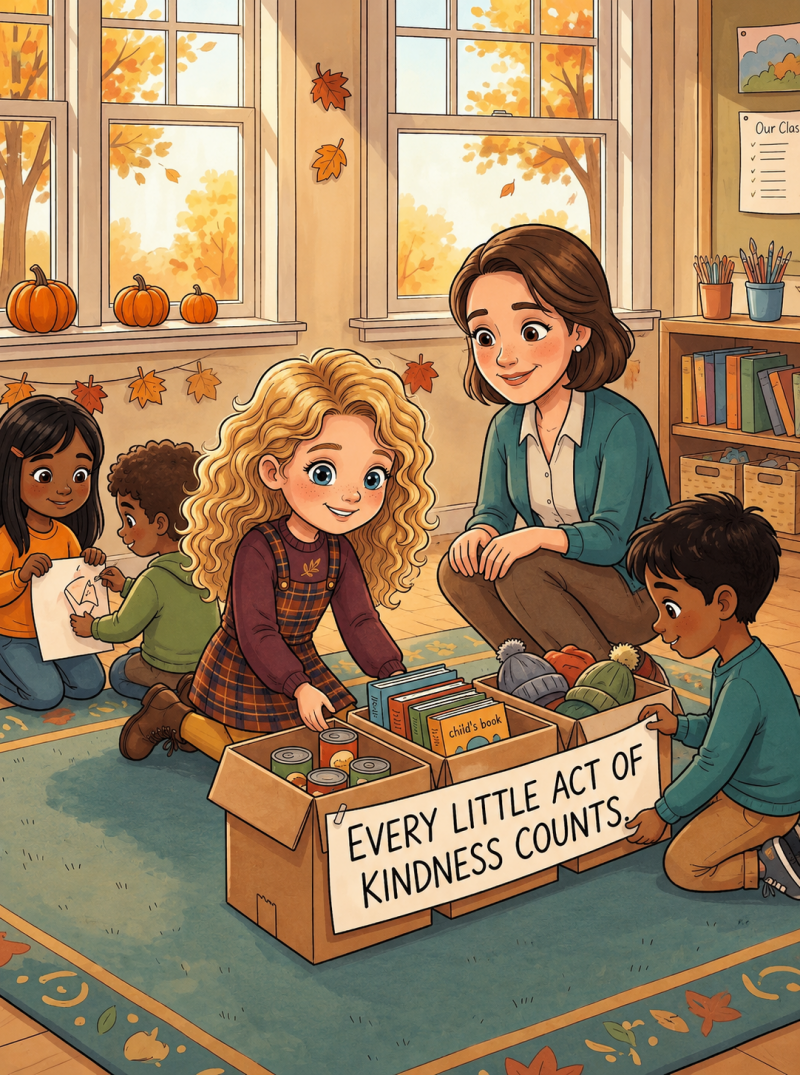
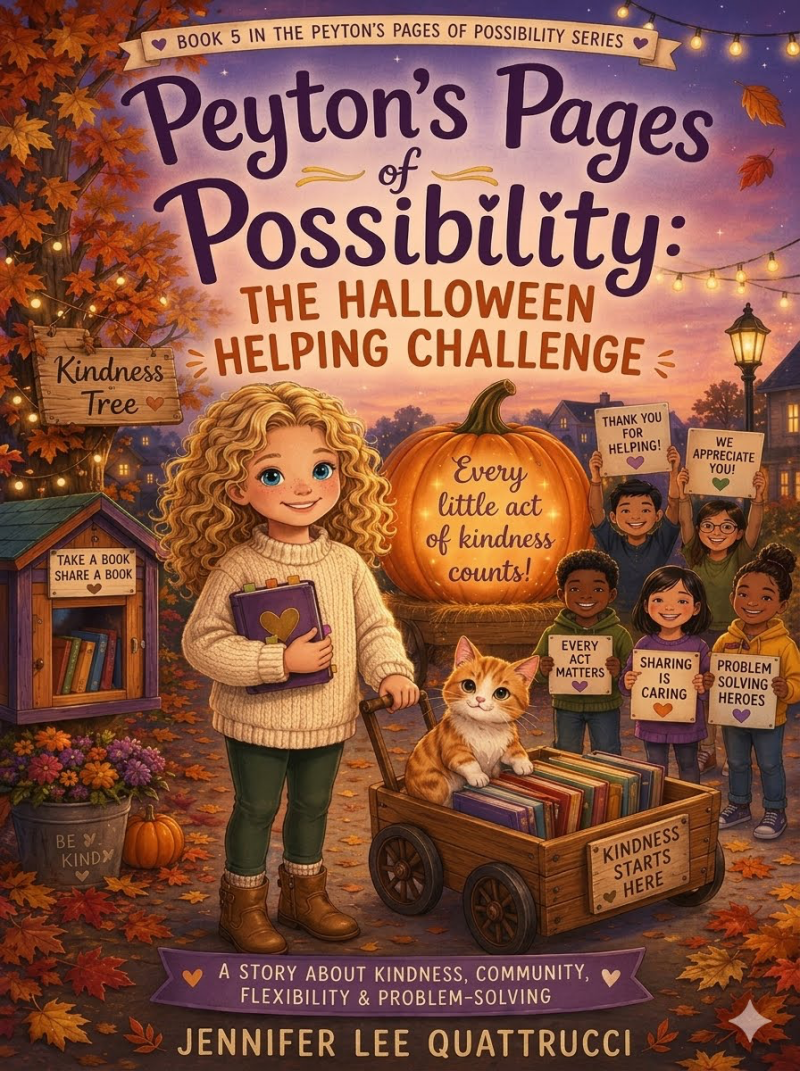
So when Mrs. Kennedy announces a Halloween Helping Challenge, Peyton is thrilled.
She immediately begins planning.
And planning.
And planning.
Because if there's one thing we know about Peyton, it's that she always has a LOT of possibilities in her head!
But in Book 7 of the Peyton's Pages of Possibility series, The Halloween Helping Challenge, Peyton discovers that sometimes the most important lessons aren't the ones we plan for.
A Story About More Than Halloween
When I first developed this book, I knew I wanted to continue the flexibility and problem-solving lessons Peyton began developing in Book 5.
I also wanted to build on the community-helping theme introduced in Book 6.
But as the story came together, I realized that there was another lesson that needed to become central to Peyton's journey:
Inclusion.
In the story, Peyton is excited about Halloween.
Costumes.
Pumpkins.
Decorations.
Halloween activities.
It all seems completely natural to her.
Until one of her classmates says:
"I don't celebrate Halloween."
And suddenly, Peyton has an opportunity to see October through someone else's eyes.
The Importance of Respecting Different Beliefs
I wanted this moment to be handled gently.
Peyton isn't asked to stop enjoying Halloween.
Her classmate isn't asked to participate.
No one needs to change their beliefs.
Instead, Peyton learns to listen.
She learns that something that feels completely normal and familiar to her may not be part of someone else's experience.
And that's an important lesson for children.
People have different:
- traditions
- beliefs
- family experiences
- cultures
- celebrations
- perspectives
And those differences don't have to divide us.
In fact, they can give us opportunities to learn about one another.
We don't have to agree with everyone to respect them.
From Flexibility to Empathy
This book still contains plenty of Peyton's familiar problem-solving moments.
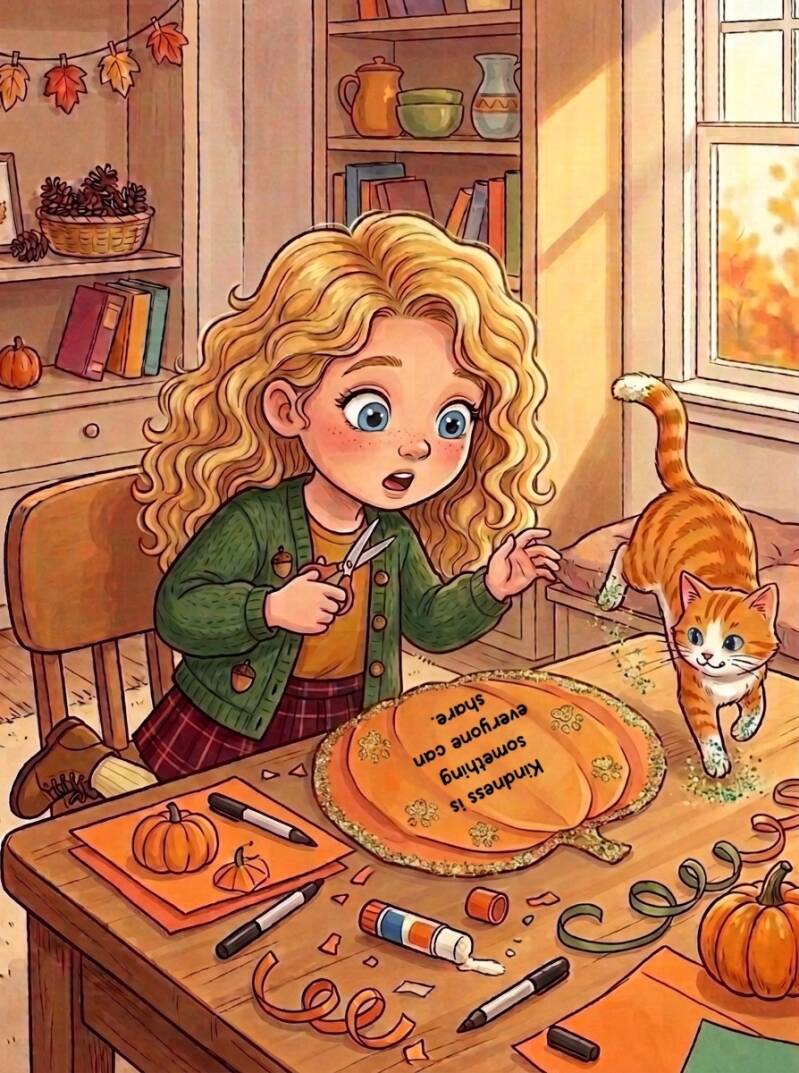
Her decorations don't cooperate.
A pumpkin disappears.
The weather threatens her big event.
Her original plan changes.
Again and again, Peyton has to stop and think:
What can I do now?
But this time, her flexibility becomes more than simply changing a plan.
She begins to understand that sometimes we need to change our perspective.
We need to stop and listen.
We need to consider another person's point of view.
We need to ask questions instead of making assumptions.
And sometimes, we need to change an activity so that more people can participate.
That is where flexibility and empathy come together.
Everyone Deserves to Feel Welcome
One of my favorite developments in the story is watching Peyton's original project become something much bigger.
At first, it's Peyton's plan.
Eventually, it becomes the class's plan.
Everyone contributes.
Everyone has ideas.
Everyone has a role.
And the project becomes better because Peyton learns to make room for other people's perspectives.
That is such an important lesson for classrooms and communities.
Inclusion isn't about making everyone the same.
It's about creating spaces where people can be different and still feel valued.
It's about saying:
"You belong here, too."
A Conversation Starter for Families and Teachers
I hope The Halloween Helping Challenge becomes more than a story children read.
I hope it becomes a conversation starter.
After reading, families and teachers might ask:
What did Peyton learn when she discovered that someone didn't celebrate Halloween?
Why is it important to respect other people's traditions and beliefs?
How can we show empathy when someone's experience is different from ours?
Have you ever discovered that someone sees something differently than you do?
How can we make our classroom, school, family, or community more welcoming?
What does it mean to truly include someone?
These conversations can help children develop the habit of pausing before judging, listening before assuming, and considering perspectives beyond their own.
A Natural Next Step from Book 6
The community-helping spirit of this story also connects directly to Book 6, Peyton & Chance's Guide to Helping Our Community.
In that book, Peyton and Chance introduce children to 20 community missions designed to inspire small acts of kindness and service.
Book 7 takes that idea one step further.
Peyton learns that helping isn't simply about doing something for someone.
Sometimes helping means:
listening to someone.
respecting someone.
including someone.
making space for someone.
Seeing someone.
Those are community-building skills, too.
The Possibility I Hope Children Take Away
By the end of the story, Peyton realizes that she doesn't need a perfect plan to make a difference.
She also realizes that her way isn't the only way.
And perhaps that's one of the most important lessons we can give children.
We don't all celebrate the same holidays.
We don't all have the same traditions.
We don't all believe the same things.
We don't all think the same way.
And that's okay.
We can be different and still be kind.
We can have different perspectives and still listen.
We can have different traditions and still be part of the same community.
Because a strong community isn't one where everyone is the same.
It's one where everyone knows they matter.
I hope The Halloween Helping Challenge gives families and educators an opportunity to talk about kindness, empathy, flexibility, diversity, inclusion, and belonging—all through a story that is still filled with pumpkins, October adventures, community service, and, of course...
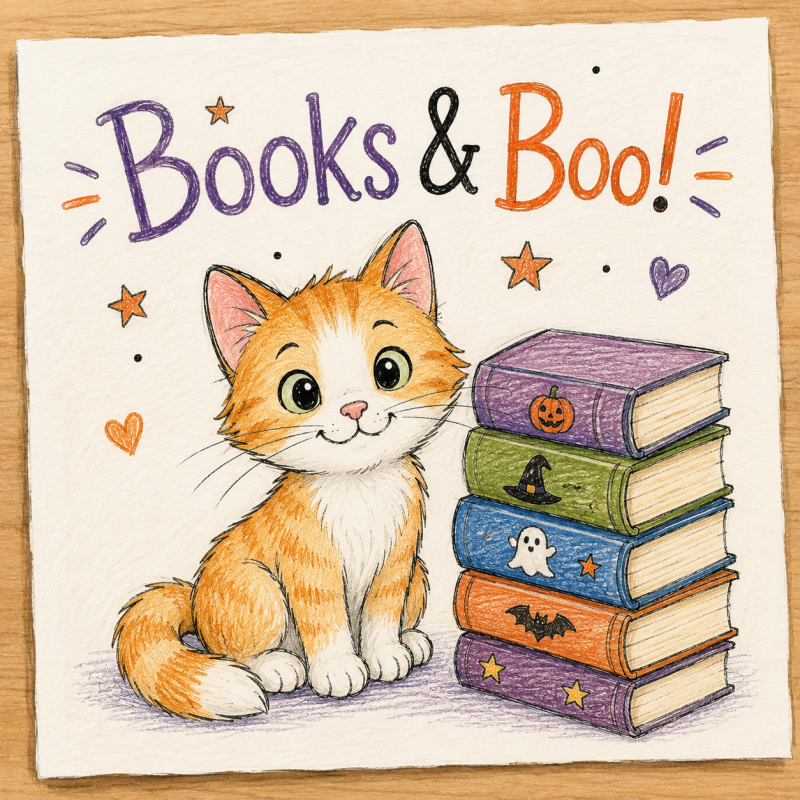
Chance.
Because no Peyton story would be complete without a little bit of cat-related chaos!
❤️
Keep looking for possibilities!
— Jennifer
Add comment
Comments