“The task of the modern educator is not to cut down jungles, but to irrigate deserts.”
— C.S. Lewis
This quote sat with me all week.
In my classroom, there are no jungles to tame—no overgrowth of privilege or excess. Instead, there are quiet deserts. Spaces where language is still forming. Where experiences are limited not by curiosity, but by circumstance. Where some of my students arrive carrying far more than a five-year-old ever should.
And yet—what I am reminded of, again and again—is this: deserts are not empty. They are waiting.
This week, I watched as small drops of language, care, and consistency began to settle into the cracks.
During our reading time, one of my students—who only weeks ago spoke in single words—looked up at me and said, “I have a connection.” A full sentence. A bridge between thought and expression. Irrigation.

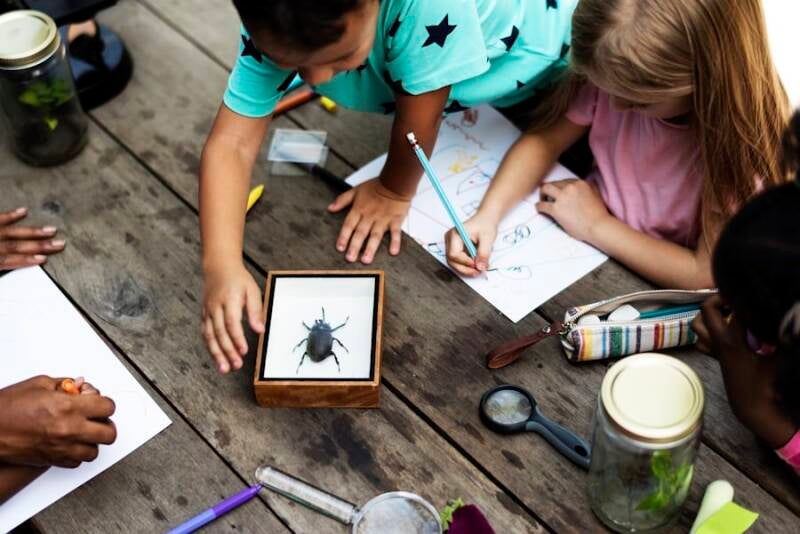
Another student, who often keeps her head down, lit up as we explored informational texts about bugs.. She gently traced the picture of a butterfly and whispered the word in both English and her home language. Identity honored. Confidence growing. Irrigation.
As a former principal, I used to think about systems—structures that could support teachers and students. As a mother, I think about the long arc of who our children will become. And as a teacher, standing in front of twenty eager, complex, beautiful learners each day, I think about the smallest moments—the drops—that make the biggest difference.
Because irrigation isn’t loud. It doesn’t demand attention. It is steady. Intentional. Hopeful.
It’s in the way we model language without correction that shames.
It’s in the way we celebrate effort over perfection.
It’s in the way we make space for every child to be seen, heard, and valued.
There is no quick transformation. No overnight bloom. But slowly, almost imperceptibly, things begin to grow.
Roots take hold.
Voices strengthen.
Confidence rises.
And what once felt like a desert begins, in its own time, to come alive.
This is the work.
Not cutting down what is already flourishing—but nurturing what has not yet had the chance.
And what a privilege it is to be part of that becoming.

Thank you for visiting the blog and taking the time to read this post.
I hope you found it worthwhile.
Best,
Jennifer
Add comment
Comments