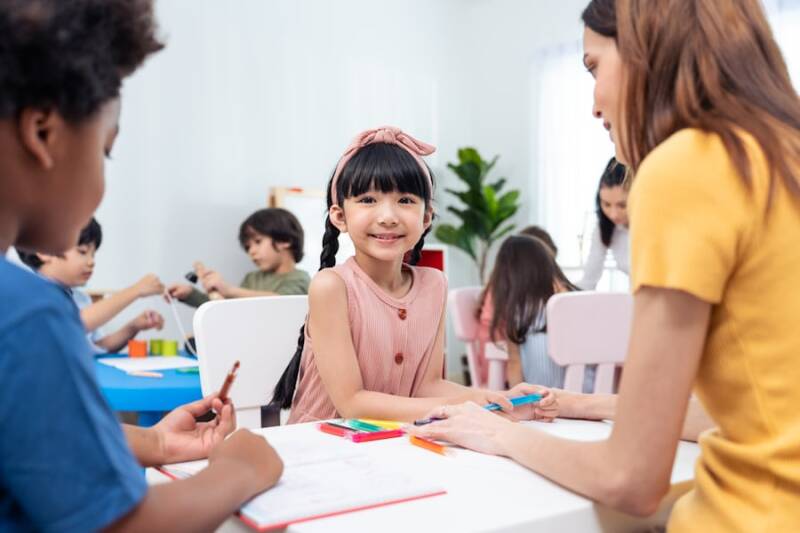
“Learning is a result of listening, which in turn leads to even better listening and attentiveness to the other person. In other words, to learn from the child, we must have empathy, and empathy grows as we learn.” — Alice Miller
This quote stayed with me all week—settling into the quiet spaces between lessons, whispering through moments that didn’t look like “instruction,” but felt like the most important teaching of all.
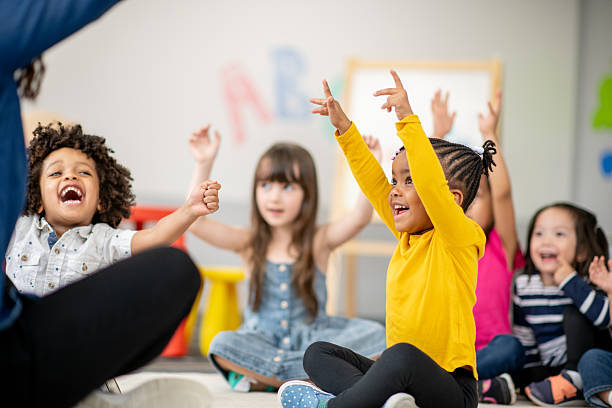
In a kindergarten classroom, listening is rarely still or silent. It’s layered. It’s expressive. It’s sometimes spoken in words, and often in actions, in tears, in body language, in the way a child hesitates before joining a group or clings a little tighter at morning drop-off.
This week reminded me that if we want children to learn, we have to begin by truly listening—not just to respond, but to understand.
There was a moment during group time when a student became frustrated, his voice rising, his body tense. It would have been easy—efficient, even—to redirect quickly, to move him along, to keep the rhythm of the classroom going. But instead, we paused. We listened. Beneath the frustration was something deeper: confusion, a language barrier, and the overwhelming feeling of not being understood.
And in that moment, the learning didn’t come from the task—it came from the connection.
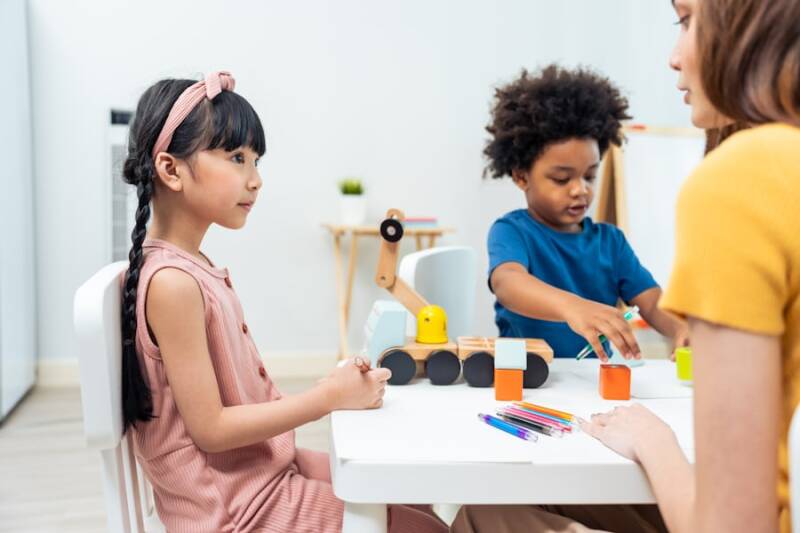
When we slowed down and leaned in with empathy, everything shifted. His shoulders softened. His voice quieted. And eventually, his confidence returned.
That’s the kind of learning Alice Miller was talking about.
As an MLL kindergarten teacher, I see every day how listening is the bridge to both language and belonging. When children feel heard, they take risks. They try new words. They engage more deeply. Listening becomes the foundation for both academic growth and social-emotional development.
But this understanding didn’t begin in my classroom—it’s been shaped by every role I’ve had.
As a former principal, I learned that the most effective leaders aren’t the ones with all the answers—they’re the ones who listen the most. To students. To teachers. To families. School culture isn’t built through mandates; it’s built through relationships, and relationships begin with listening.
As a mom of two—now 16 and 20—I’ve seen how this evolves over time. When they were little, listening meant getting down on the floor, hearing about their day in fragments and feelings. Now, it means creating space for bigger conversations, sometimes waiting through silence, sometimes reading between the lines. But the core is the same: when children know we are truly listening, they let us in.
And as the author of Educate the Heart, I’ve long believed that empathy is not an “add-on” to education—it is the foundation. We cannot teach the whole child if we are not willing to understand the whole child.
This week, that belief came to life in the smallest, most powerful ways.
In the child who used words instead of tears because someone had taken the time to listen to them before.
In the student who noticed a friend’s feelings and said, “Are you okay?”—modeling the empathy they’ve experienced.
In the classroom moments where progress wasn’t measured in right answers, but in deeper connections.
Social-emotional learning lives in these moments.
It lives in the pause before we respond.
In the choice to listen instead of correct.
In the understanding that behavior is communication—and every child is telling us something, if we’re willing to hear it.
And perhaps most importantly, it reminds us that learning is not a one-way exchange. It’s not something we deliver—it’s something we build together.
When we listen to children, we don’t just teach them.
We learn from them.
And in that shared space of listening and empathy, something powerful happens—something that extends far beyond the early years and into the kind of humans our children will become.
Because when we teach children that their voices matter, we are also teaching them to value the voices of others.
And that may be the most important lesson of all.
Thank you for taking the time to visit my blog, and for reading this post.
I hope you found it worthwhile.
Best,
Jennifer
Add comment
Comments