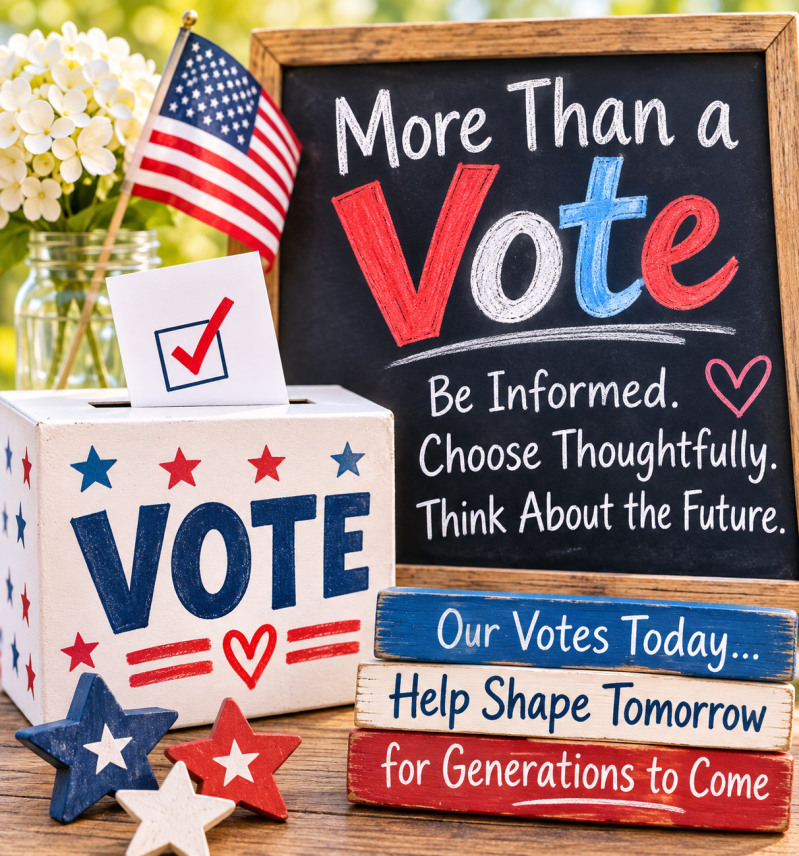
Tomorrow, I will have the opportunity to do something that is both a privilege and a responsibility: vote.
As a Johnston, Rhode Island resident, I will be voting in local elections, making choices about the people who will help shape the community where I live. As someone who works in Providence, I will also be voting in an election that carries significance in another part of my life: the selection of a new union president.
Although these elections serve different purposes, they have something important in common. Both ask us to think beyond the moment, consider the people seeking leadership, and recognize that our decisions have consequences that extend far beyond Election Day.
And that is why voting matters.
Voting Is About More Than Having a Voice
We often hear that every vote counts. It is a familiar phrase, but I think it deserves more consideration than we sometimes give it.
Voting isn't simply about showing up, checking a box, or supporting someone because we know their name. It is about understanding what is at stake, taking the time to become informed, and making a decision based on what we genuinely believe will move our communities and organizations forward.
Whether we are choosing local officials or electing someone to represent our interests as union members, we should ask ourselves some important questions.
What experience does this person bring?
What have they demonstrated through their actions?
Do they understand the responsibilities of the position?
What kind of leadership do they offer?
Most importantly, do we believe their experience, judgment, and priorities will contribute to meaningful improvement?
These questions matter because leadership is not simply about promises. It is about the ability to listen, understand challenges, make thoughtful decisions, and follow through.
Experience Matters, But So Does the Willingness to Improve
I believe that progress requires both experience and a willingness to grow.
We should consider what candidates have accomplished, what they have learned from their experiences, and how they approach the challenges ahead. We should look beyond personalities, popularity, friendships, and familiar names.
Sometimes the most important question isn't who we have always supported or who others are encouraging us to support. It is who we believe is best prepared to serve the responsibilities of the position.
Making an informed decision means being willing to look at information objectively, listen to different perspectives, and form our own conclusions.
We don't all have to agree. In fact, healthy communities and organizations should make room for different opinions. But we should all take our responsibility to make an informed choice seriously.
Our Votes Have Consequences Beyond Today
This is perhaps the part of voting that deserves the most attention.
The decisions we make today help establish the direction of tomorrow.
Local elections influence the communities our children will grow up in, the resources available to families, the priorities of our neighborhoods, and the opportunities available to future generations.
Union elections carry their own lasting significance. The leadership we choose helps influence the direction of our organization, the representation of its members, the working conditions we advocate for, and the future experienced by those who will come after us.
In both situations, we are making decisions that reach beyond our immediate interests.
It is easy to think about what a particular candidate might mean for us right now. It is just as important to consider what their leadership might mean five years from now, ten years from now, or for someone who has not yet had the opportunity to participate in these decisions.
The people who come after us will inherit the communities and organizations we help shape today.
That is a responsibility worth remembering.
Don't Just Vote. Think About What Your Vote Represents.
I would never suggest that everyone needs to arrive at the same conclusion. Our experiences are different. Our priorities may differ. And our perspectives are shaped by the roles we hold in our communities and workplaces.
But I do believe we owe it to ourselves and to one another to be thoughtful.
Read. Ask questions. Look at experience. Consider the issues. Listen, but don't simply follow someone else's opinion. Take the time to understand what each position involves and what the people seeking those positions hope to accomplish.
And when you vote, do so with the confidence that you have considered your decision carefully.
We cannot expect improvement without participating in the decisions that help make improvement possible. We cannot expect strong leadership if we aren't willing to think critically about who we choose to lead.
Tomorrow's ballot represents more than a collection of names. It represents opportunities to influence our communities, our workplaces, and the future.
A vote is a small action with the potential for a lasting impact.
So tomorrow, wherever you are voting and whatever election you are participating in, remember that your vote is yours. Make it count. Make it informed. Make it thoughtful.
And most importantly, vote with an understanding that the decisions we make today help create the world we leave for the next generation.
Because leadership matters. Experience matters. Progress matters.
And so does your vote.
With gratitude.
Jennifer
Add comment
Comments