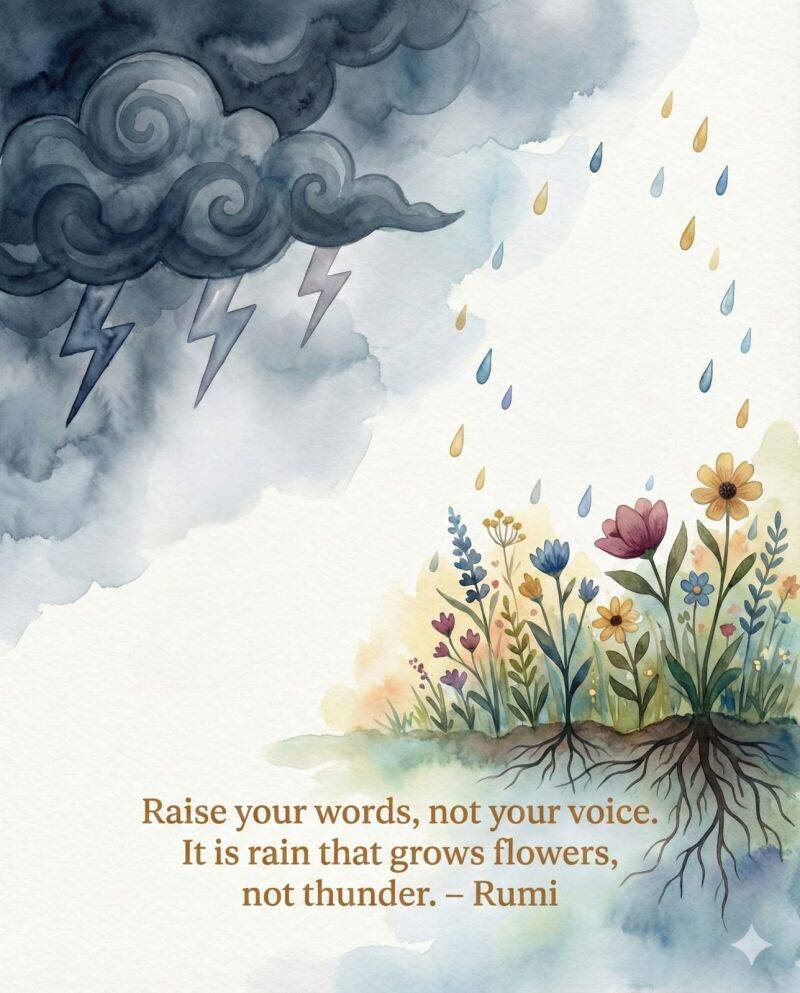
“Raise your words, not your voice. It is rain that grows flowers, not thunder.” — Rumi
This quote sat with me all week—tucked between the hum of a busy kindergarten classroom and the quiet moments that matter most. In a space where energy runs high and curiosity runs even higher, it would be easy to let my voice rise above the noise. But again and again, I was reminded: growth doesn’t come from volume. It comes from intention.
This week, we explored forces—pushes and pulls, the invisible hands that shape our world. As tiny hands experimented with toy cars and blocks, there were moments of excitement… and moments of frustration. When a carefully built ramp collapsed or a car didn’t move as expected, I watched their faces fall. Years ago, I might have rushed in with louder directions, quick fixes, or over-explanations. But this week, I softened.
“Tell me what you notice,” I said quietly.
And just like that, the room shifted.
Instead of thunder, there was rain—gentle, steady thinking. They adjusted angles, changed directions, tried again. They didn’t need my voice to be louder. They needed my words to be better.
The same held true in math as we worked on adding and subtracting. For many of my multilingual learners, numbers are not just numbers—they are language. They are meaning. As we counted, combined, and took apart groups, I resisted the urge to overcorrect or overtalk. Instead, I offered simple, clear language:
“I had 5. I gave away 2. Now I have…?”
And I waited.
Silence can feel uncomfortable, but it is often where the deepest learning happens. One student looked at her fingers, another whispered the numbers to himself, and then—like flowers opening after rain—answers began to bloom. Not shouted. Not rushed. Grown.
In phonics, we stepped into the world of long vowels—long i and long o. There were giggles as we stretched the sounds: “iiiiice” and “ooooopen.” Some stumbled, some mixed them up, some hesitated. And again, I thought of Rumi. Not louder. Clearer. Kinder.
“Watch my mouth.”
“Listen again.”
“You’re getting closer.”
Words that guide, not overwhelm.
And then there was our interactive read-aloud—our fascinating dive into worker bees. We learned how they communicate, how they move with purpose, how each bee plays a role in the hive. As we acted out their movements, buzzing softly around the room, I noticed something beautiful: they weren’t chaotic. They were coordinated. Intentional. Connected.
It made me wonder—what if our classrooms worked more like that hive?
Not driven by the loudest voice, but by shared understanding. Not by control, but by connection.
As a former principal, I’ve stood in rooms where “thunder” felt necessary. As a mom, I’ve had moments where my patience wore thin. And as a teacher, especially in an inner-city MLL kindergarten classroom, I know the pressure to manage, direct, and keep things moving.
But this week reminded me of something deeper.
Children don’t need more noise.
They need more meaning.
They need words that water their thinking.
Words that invite them in.
Words that trust them to grow.
Because in the end, it is not the thunder they carry with them.
It is the rain.
Thank you for taking the time to visit my blog and read this post. I hope you found it worthwhile.
Best,
Jennifer
Add comment
Comments