I’ve worn many hats in education over the years—classroom teacher, elementary principal, instructional leader, curriculum promoter, and now, once again, a kindergarten teacher. I’ve also worn the most important hat of all: mom. And across every role, one truth has remained constant: children cannot learn well when their hearts are overwhelmed.
As the author of Educate the Heart, I often say that social-emotional learning is not an “extra.” It is the foundation. And today, more than ever, SEL strategies like mindfulness, emotional regulation, and self-compassion are essential tools—not just for academic success, but for preventing burnout in even our youngest learners.
Stress Shows Up Earlier Than We Think
Academic burnout isn’t something that suddenly appears in high school or college. I’ve seen it quietly surface in kindergarten classrooms:
– The child who shuts down when work feels hard
– The perfectionist who melts down over a small mistake
– The student who says, “I’m not good at this,” before even trying
As a principal, I remember standing in hallways watching students move from class to class, noticing their shoulders tense, their pace quickening. I would pause and pay close attention to the emotional temperature within classrooms.
Sometimes the answer wasn’t about academics at all—it was about overwhelm.
Mindfulness: Teaching Children to Pause
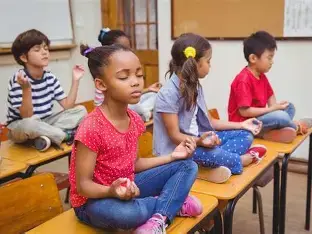
Mindfulness doesn’t mean silence or stillness for long periods, especially for young children. It means teaching them how to pause, breathe, and notice what’s happening inside their bodies.
I remember saying to a group of educators while encouraging the implementation of the district’s newly adopted SEL program, during a staff meeting:
“If we can teach children how to breathe through frustration now, imagine what they won’t carry with them later.”
In my kindergarten classroom today, mindfulness looks like:
- Taking three “balloon breaths” before starting a task
- Placing a hand on the heart and noticing how it feels
- Naming sensations: “My body feels wiggly,” or “My shoulders feel tight”
These moments don’t take away from learning—they protect it.
Emotional Regulation: Naming Feelings Builds Capacity
As a principal, I often heard concerns like, “If we talk about feelings too much, we won’t get through the curriculum.” Although I know unregulated emotions block access to the curriculum, it wasn’t always easy to convince colleagues that this is true.
When children can name what they’re feeling—frustrated, worried, disappointed—they gain power over it. Emotional regulation is not about controlling emotions; it’s about understanding them.
I still remember kneeling next to a student who had torn up his paper in frustration and quietly saying:
“It looks like your feelings are bigger than the work right now. Let’s help them settle first.”
That conversation didn’t delay learning—it made learning possible.

Self-Compassion: The Antidote to Burnout
Perhaps the most overlooked SEL strategy is self-compassion. Too many students—especially high-achieving ones—believe that struggle means failure.
As both an educator and a mom, this thought hits close to home.
I’ve said to countless children over the years:
“Talk to yourself the way you’d talk to a friend.”
In schools, self-compassion sounds like:
- “It’s okay to make mistakes.”
- “Learning takes time.”
- “I can try again.”
When students learn to be kind to themselves, stress loses its grip. Burnout loosens its hold.
Educating the Heart Is Educating the Whole Child
In Educate the Heart, I write about the responsibility we carry as educators—not just to teach standards, but to shape humans who feel safe, capable, and valued.
As a principal, I often found myself reflecting on how we could better prepare students for life, rather than just for the next grade.
And now, back in the kindergarten classroom, I see it clearly:
When we prioritize mindfulness, emotional regulation, and self-compassion, we give children tools they will carry far beyond our walls.
We don’t prevent burnout by pushing harder.
We prevent burnout by teaching children how to care for their hearts while they learn.
And that—now more than ever—is the work that matters most.

A Reflection for Educators: Questions to Consider
Preventing Burnout Through SEL
Pause & Notice
What signs of stress or overwhelm do I notice in my students right now?
How do these emotions show up in their learning or behavior?
Mindfulness in Practice
When do I intentionally create moments for students to pause, breathe, or reset?
How might small mindful moments protect learning rather than interrupt it?
Emotional Regulation
How am I helping students name and understand their emotions?
What language do I use when students feel frustrated or discouraged?
Self-Compassion
How do I model kindness toward myself and my students when learning feels hard?
What messages about mistakes are being reinforced in my classroom?
One Intentional Shift
This week, I will support my students’ hearts by…
When we educate the heart, we sustain learning—for students and educators alike.
Thank you for visiting my blog today, and for taking the time to read this post. I hope you found it worthwhile and that the reflective questions are helpful as you work to educate the hearts of many.
Best,
Jennifer
Add comment
Comments